

If you’ve been considering dental implants in Childersburg, AL, this post will help you understand what to expect and how to choose the right implant dentist nearby. It explains the procedure in straightforward terms, addresses comfort and recovery, and outlines cost and financing so you can plan with confidence.
You can regain a stable, natural-feeling smile with an experienced implant dentist in Childersburg who uses modern technology and caring, patient-focused care. Expect clear explanations, options for comfort during treatment, and practical aftercare tips that make the process manageable.
They’ll walk you through finding a local practice with the right experience, modern equipment, and a gentle approach to ease anxiety. Keep reading to learn how implants work, what to ask at your first appointment, and how to care for your new smile.
Understanding Dental Implants
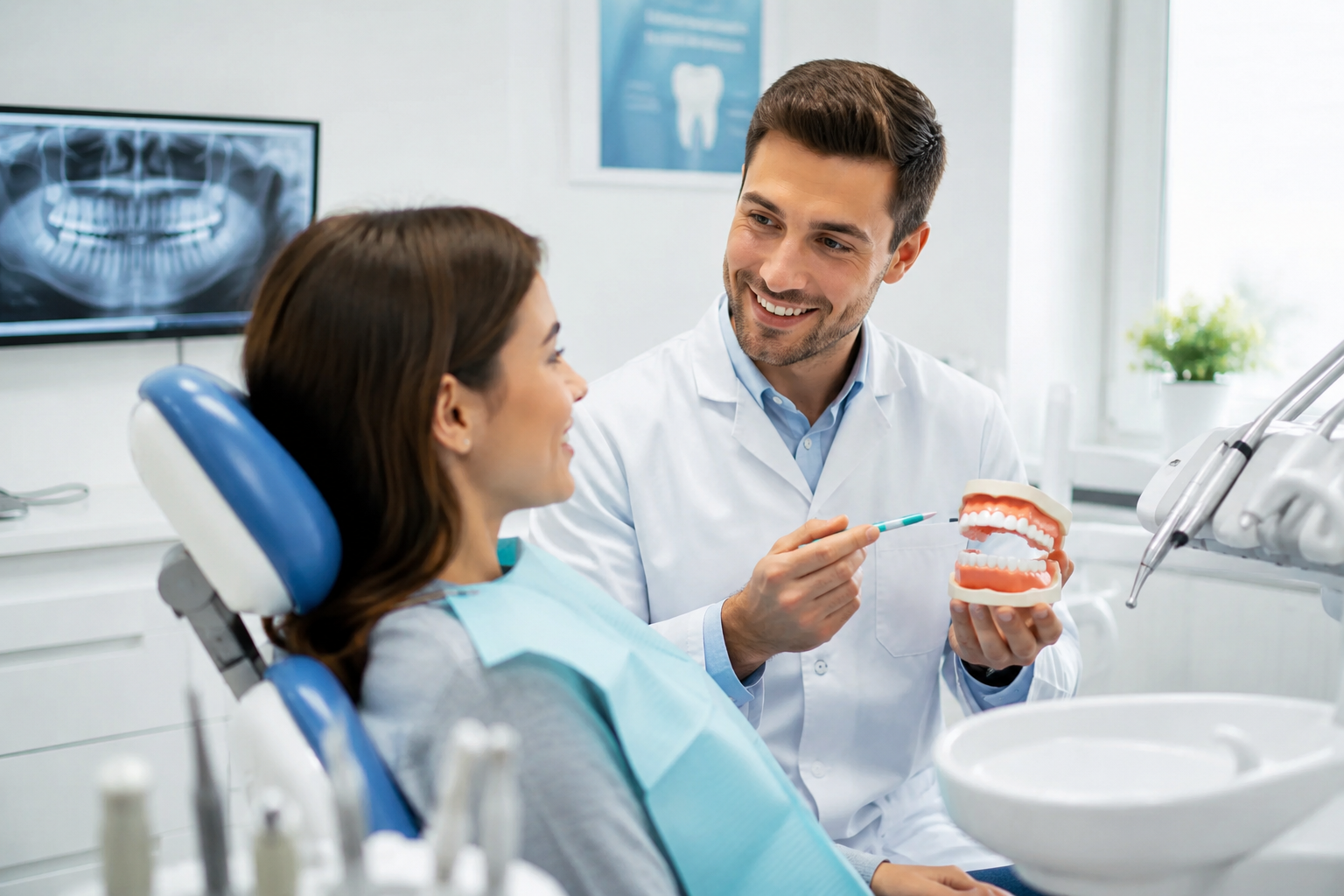
Dental implants restore missing teeth by replacing both the tooth root and crown. They stabilize chewing, preserve jawbone, and look like natural teeth.
What Are Dental Implants?
A dental implant is a titanium or titanium-alloy post surgically placed into the jawbone to act as an artificial tooth root. After the implant integrates with bone (osseointegration), a custom abutment and crown attach to restore form and function.
Key components:
- Implant body (post): anchors in bone.
- Abutment: connects post to crown.
- Crown: visible tooth replacement fabricated to match color and shape.
Implants differ from bridges and dentures because they replace the root level, not just the visible tooth. This root replacement prevents bone loss that typically follows tooth extraction. Modern implants have success rates above 90% when placed by trained clinicians and maintained with good oral hygiene.
Benefits for Oral Health
Implants protect surrounding teeth by eliminating the need to grind down adjacent teeth, which bridges require. They also distribute bite forces through the jawbone, reducing stress on neighboring teeth and preventing shifting.
Bone preservation matters: the implant’s stimulation keeps the alveolar bone from resorbing, maintaining facial structure and jaw height. Function improves—patients typically regain near-normal chewing efficiency compared with conventional dentures.
Other practical benefits include easier speech than unstable dentures, improved comfort because implants are fixed, and simplified oral hygiene since implants can be brushed and flossed like natural teeth. Risks exist (infection, nerve irritation), but careful planning and follow-up lower these chances.
Who Might Need Implants?
Candidates include adults with one or more missing teeth who have adequate jawbone volume or can undergo bone grafting. Patients with healthy gums and controlled chronic conditions (like diabetes) often qualify; uncontrolled disease or heavy smoking may reduce success rates.
Ideal scenarios:
- Single missing tooth without damaging adjacent teeth.
- Multiple missing teeth where implants can support bridges or dentures.
- Denture wearers seeking greater stability and comfort.
A dentist evaluates bone density via imaging, reviews medical history, and discusses lifestyle factors before recommending implants. Pediatric patients still growing are typically deferred until jaw growth completes.
Finding the Right Dentist in Childersburg
Patient comfort, clear communication, and proven implant outcomes matter most when choosing a local implant dentist. Practical details about training, hands-on experience, and how the office cares for patients will guide decision-making.
Qualities of a Great Implant Dentist
A great implant dentist shows consistent clinical competence and transparent treatment planning. They document case histories with before-and-after photos, use CBCT scans for precise implant placement, and provide written treatment plans that outline costs, timelines, and alternatives.
Look for board certifications, implant-specific fellowship or continuing-education credits, and memberships in professional groups like the American Academy of Implant Dentistry. Clinical skill pairs with strong chairside communication: the dentist explains surgical steps, potential risks, and expected healing in plain language and confirms patient understanding.
Assess office logistics: modern sterilization protocols, in-office sedation options, digital workflows (intraoral scanners, CAD/CAM restorations), and a collaborative team including a restorative dentist or dental lab contact. Patient reviews that mention clear follow-up care and predictable results add practical evidence of quality.
Local Experience and Training
Local experience reduces surprises during treatment because the dentist understands regional referral patterns and patient needs. A Childersburg dentist who has placed implants for several years will be familiar with common case types—single-tooth replacements, implant-retained dentures, and ridge augmentation needs—and with nearby specialists for complex cases.
Verify training specifics: Where the dentist completed surgical implant courses, the number of implants placed annually, and participation in hands-on residencies or university programs. Ask for case studies from the Childersburg office showing similar cases: x-rays, timelines, and outcomes.
Consider collaborative networks. Dentists who work regularly with local oral surgeons, periodontists, and lab technicians streamline care and reduce appointment delays. Local track record also affects postoperative support—nearby patients receive faster in-person follow-up when complications or adjustments arise.
Patient-Centered Approach
Patient-centered implant care focuses on individualized treatment, comfort measures, and clear financial options. The office should perform a thorough initial exam, review medical history, and discuss anesthesia choices—local, oral sedation, or IV—based on patient anxiety and medical status.
Transparent billing matters: a good practice provides itemized estimates, explains insurance and third-party financing, and outlines warranty or maintenance plans for restorations. Patient education materials—visual treatment guides, surgical recovery instructions, and home-care checklists—help set realistic expectations.
Postoperative support completes the approach. Confirm the practice offers timely follow-up visits, emergency contact procedures, and routine maintenance plans for implants. Patients benefit most when the team treats them as partners, listens to concerns, and schedules restorations with both function and comfort in mind.
The Dental Implant Procedure Explained
This section describes how clinicians evaluate needs, place titanium implants into the jaw, and manage healing so implants become stable foundations for crowns or bridges. It focuses on what patients can expect at each stage: visits, tests, surgical steps, and recovery milestones.
Consultation and Planning
The initial visit starts with a medical and dental history review and a focused oral exam. The dentist orders a CBCT scan and full-mouth X-rays to measure bone height, width, and proximity to nerves or sinuses; these images determine whether bone grafting or sinus lift is necessary.
Dentists create a treatment plan that lists implant type, diameter, length, and proposed position, often using digital implant planning software. Cost, timeline, anesthesia options, and alternative treatments (bridges or dentures) get discussed in plain terms so patients can make informed choices.
If the patient needs preparatory work—extractions, periodontal therapy, or bone grafting—the clinician schedules those procedures before implant placement. Clear instructions about medication, smoking cessation, and fasting get provided at this stage to lower surgical risk and improve outcomes.
Step-by-Step Implant Placement
On surgery day, the clinician administers local anesthesia or IV sedation based on the agreed plan. The mouth is numbed; a small incision exposes the bone and a pilot hole is drilled at the planned angle and depth using guided templates or freehand technique.
The implant (a titanium or titanium-alloy screw) is threaded into the bone and seated to a specific torque value to ensure primary stability. A healing cap or cover screw is placed; if immediate provisional teeth are possible, the dentist secures them according to load-management protocols.
If the plan required bone grafting or a sinus lift, those steps occur before or during implant placement. The clinician closes the tissue with sutures and provides written post-op care: cold packs, pain medications, and dietary restrictions to protect the surgical site.
Healing and Recovery Period
Osseointegration—the process where bone fuses to the implant—typically takes 3 to 6 months in the lower jaw and 4 to 9 months in the upper jaw. Patients should follow oral hygiene instructions: gentle rinsing, soft-bristle brushing away from the site, and avoiding force on provisional restorations.
Follow-up visits occur at 1–2 weeks for suture removal and at periodic intervals to check healing and radiographic bone levels. Signs of complications—persistent severe pain, swelling that worsens after 72 hours, or mobility—warrant immediate contact with the dental office.
After successful integration, the clinician exposes the implant (if submerged), attaches an abutment, and takes digital or conventional impressions for the final crown or bridge. The lab fabricates a restoration matched to adjacent teeth; when fitted, the prosthesis is adjusted for bite and esthetics, and the patient receives maintenance instructions and a recall schedule.
Ensuring Comfort Throughout Your Visit
Patients can expect careful attention to physical comfort, emotional ease, and clear communication at every step. The team prioritizes pain control, minimized anxiety, and tailored care plans so each visit feels safe and manageable.
Gentle Care Techniques
The clinic uses minimally invasive surgical methods to reduce tissue trauma and accelerate healing. Surgeons favor precision-guided implant placement with small incisions, gentle tissue handling, and layered suturing to limit swelling and soreness.
Local anesthetic protocols are adapted to each patient’s needs, with buffered solutions and slow infiltration to decrease injection discomfort. Instruments and suction are positioned to avoid pressure on the face and jaw during procedures.
Postoperative instructions emphasize simple, practical steps: cold packs for 24 hours, soft diet choices, gentle oral rinses after 24 hours, and over-the-counter analgesics unless prescription meds are indicated. Staff members check healing progress by phone within 48–72 hours and schedule in-office reviews to address any concerns promptly.
Sedation and Anxiety Management
For anxious patients, the practice offers multiple sedation levels: nitrous oxide (laughing gas) for mild anxiety, oral sedatives for moderate nervousness, and monitored IV sedation when deeper relaxation is needed. Pre-sedation consultations assess medical history, current medications, and airway safety to select the safest option.
Clear instructions cover fasting, transportation, and post-sedation monitoring so patients know what to expect before and after treatment. During procedures, continuous monitoring tracks heart rate, oxygen saturation, and responsiveness; a trained team member remains with the patient at all times.
Non-pharmacologic strategies also support calmness: noise-cancelling headphones, weighted blankets, and guided-breathing cues. The staff encourages patients to express specific fears so the team can personalize comfort measures and reduce surprises.
Personalized Treatment Plans
Each implant plan begins with a thorough exam: digital 3D imaging, periodontal assessment, and a review of medical conditions like diabetes or osteoporosis that affect healing. The clinician explains implant type, diameter, and position with images so patients visualize choices.
Timing and staging are customized—single implants, immediate placement, or staged bone grafting—based on bone volume and esthetic needs. Cost estimates and a timeline are provided in writing, including follow-up visits for restorative work and maintenance cleanings.
After treatment, a tailored home-care schedule outlines brushing technique around implants, interdental cleaners to use, and frequency of professional checkups to protect long-term success. The team schedules reminders and offers financing options when needed, ensuring the plan fits the patient’s health and budget.
Caring for Dental Implants
Daily attention, routine professional checks, and lifestyle choices all affect implant longevity. Consistent cleaning, scheduled exams, and small habit changes help prevent infection and mechanical problems.
Daily Cleaning and Maintenance
They should brush twice daily using a soft-bristled toothbrush and low-abrasive toothpaste to avoid scratching the implant surface. Brushing at a 45-degree angle around the gum line removes plaque where the implant meets tissue.
Flossing once daily with implant-specific floss or an interdental brush cleans the contact points between teeth and implants. A water flosser can help remove debris below the gum line and is especially useful for patients with bridges or limited dexterity.
Rinsing with an antimicrobial mouthwash (chlorhexidine short-term or alcohol-free daily rinses) reduces bacterial load; follow the dentist’s instructions on duration. Avoid abrasive products like baking soda or whitening powders that can damage implant components.
They should inspect the implant site weekly for redness, swelling, bleeding, or unusual mobility and report issues immediately. Replace toothbrushes every 3 months or sooner if bristles fray.
Regular Check-Ups
They need professional exams every 3–6 months initially; once healing is stable, the dentist may extend visits to every 6–12 months. These appointments include visual inspection, periodontal probing around implants, and bite evaluation.
Digital X-rays or cone-beam scans monitor bone levels and detect early bone loss or hidden complications. The hygienist will perform specialized cleaning using plastic or titanium instruments that won’t scratch implant surfaces.
During visits, the clinician checks the integrity of abutments, crowns, and screw-retained parts to catch loosening or wear. Timely tightening or replacing components prevents fractures and protects surrounding bone.
Tips for Long-Term Success
Avoid smoking and limit heavy alcohol; both impair healing and increase risk of peri-implantitis. If they smoke, quitting before implant surgery and staying smoke-free afterward significantly improves outcomes.
Protect implants during sports or bruxism by using a custom night guard or athletic mouthguard. Heavy biting forces can fracture prosthetic parts or accelerate bone loss around the implant.
Maintain a balanced diet rich in calcium and vitamin D to support bone health; encourage regular medical follow-up for chronic conditions like diabetes that affect healing. Promptly report any persistent pain, loosening, or changes in chewing to the dental office for early intervention.
For personalized recommendations, patients should consult their implant dentist in Childersburg to set a tailored cleaning schedule and follow-up plan.
Cost and Financing Options
Patients in Childersburg can expect a range of costs for dental implants depending on factors like implant type, number of teeth, and preparatory procedures. Financing choices often include insurance contributions, in-office plans, and third-party lenders to spread payments over time.
What Influences Cost
Implant cost varies by component and procedure. A single titanium implant with a crown typically ranges from $2,000 to $4,000 in the region, while zirconia implants or premium custom crowns can add several hundred dollars.
Pre-treatment needs change the price substantially. Bone grafts, sinus lifts, and extractions each add $300–$1,500 or more depending on complexity. Multiple missing teeth increase cost per arch but reduce per-tooth cost when using implant-supported bridges or dentures.
Provider experience and technology also matter. Practices that use guided implant surgery, cone-beam CT scans, or CAD/CAM crowns often charge more but offer greater predictability and fewer appointments. Office location and lab fees further affect final estimates.
Insurance and Payment Plans
Most dental insurance plans categorize implants as elective, covering crowns or prosthetics partially but not the implant body. Patients should verify plan details and annual maximums; typical coverage for crowns or bridges might be 50% up to a $1,000–$2,000 yearly limit.
Many Childersburg practices offer in-office payment plans that split remaining balances into 3–12 monthly payments, sometimes interest-free with a down payment. Third-party lenders such as CareCredit or local medical credit lines provide 6–60 month terms; promotional 0% APR options are common for shorter terms.
Patients should obtain a pre-treatment estimate and ask billing staff for a breakdown: implant fixture, abutment, crown, lab fees, and any surgical add-ons. That breakdown helps identify which items insurance may cover and which require financing.
Discussing Options With Your Provider
The best conversation happens before any surgical work. Patients should request a written treatment plan that lists procedures, materials, timelines, and all costs, including separate line items for grafts, scans, and temporary restorations.
Providers can outline staged treatment to reduce immediate out-of-pocket costs—such as completing extractions and grafting first, then placing implants after healing—or alternative options like implant-retained dentures. Staff can run insurance benefits and present at least two payment scenarios: full upfront and financed.
Encourage patients to ask about warranties, follow-up care fees, and what happens if an implant fails. Clear answers help patients choose an affordable, clinically appropriate plan and schedule a consultation to finalize financing.
Why Modern Dental Technology Matters
Modern dental technology shortens treatment time, improves comfort, and increases predictability for implant cases. It helps clinicians plan with precision, reduces surprises during surgery, and supports faster recovery.
Advanced Imaging in Implant Dentistry
Cone-beam computed tomography (CBCT) provides three-dimensional scans of the jaw with accurate measurements of bone height, width, and density. This lets the clinician select the correct implant diameter and length, avoid the inferior alveolar nerve or sinus floor, and design optimal implant angulation.
Digital intraoral scanners capture highly detailed impressions without messy putty. These files integrate with CAD/CAM systems to fabricate custom surgical guides and prosthetic crowns with tight fit and accurate occlusion. The combined CBCT + digital scan workflow reduces chair time and fewer adjustments at crown delivery.
Software-driven treatment planning enables virtual placement, allowing the team to simulate outcomes and communicate options with the patient before any procedure begins. That transparency reduces anxiety and sets clear expectations about timeline, costs, and restorative steps.
Benefits of Up-to-Date Tools
Surgical guides created from digital planning transfer the planned implant position precisely into the mouth, lowering the risk of malposition and implant failure. Guided surgery can be flapless, which often reduces bleeding, swelling, and healing time compared with traditional open procedures.
High-speed, modern implant motors with torque control and irrigation protect bone health during osteotomy preparation. That preserves primary stability and supports earlier loading when clinically appropriate. Additionally, contemporary materials—zirconia and high-strength ceramics—offer durable, esthetic crowns and abutments with biocompatibility.
In-office milling machines and same-day crown workflows shorten restorative timelines from weeks to hours for selected cases. Patients benefit from fewer visits and less temporary prosthesis time. Better sterilization equipment and digital recordkeeping also improve safety and continuity of care.
How Technology Improves Outcomes
Precision in planning and execution directly reduces complications such as nerve injury, sinus perforation, and prosthetic misfit. Accurate implant placement improves long-term bone preservation and reduces mechanical overload that can cause screw loosening or fracture.
Digital monitoring and follow-up tools, including peri-implant radiographs and clinical software, help clinicians track osseointegration and detect early signs of peri-implantitis. Early intervention preserves implants and avoids more extensive treatment later.
Patient comfort improves through minimized invasive techniques, shorter appointments, and clearer communication using visual treatment plans. This combination increases treatment acceptance and adherence to maintenance, which are key drivers of long-term success.
Preparing for Your First Appointment
Patients should arrive a few minutes early to complete any remaining paperwork and settle in. This helps the team start on time and reduces anxiety.
They will be asked about medical history, current medications, and any allergies. Bringing a list of medications and previous dental records, if available, speeds up the process.
The clinic often takes digital X‑rays and photographs to plan implant placement precisely. These images let the dentist explain options clearly and tailor treatment to the patient’s bone structure and smile goals.
Patients should wear comfortable clothing and plan for a ride home if sedation is requested. Clear instructions about fasting or medication adjustments come with the appointment confirmation.
Expect a candid, jargon‑free discussion about costs, financing, and timelines. The dentist will outline each step—extraction (if needed), implant placement, healing time, and final restoration—so patients know what to expect.
To prepare questions, patients can note concerns about pain management, recovery time, and long‑term care. Asking about alternatives and success rates helps them make an informed choice.
Contact information for post‑procedure concerns is provided before leaving. This reassures patients that support is available throughout the implant process and encourages them to reach out with any worries.
Building Trust for a Healthier Smile
A warm, clear explanation reduces anxiety and helps patients make good decisions about implants. The dentist describes each step—assessment, treatment plan, surgery, and follow-up—so people know what to expect and why each step matters.
They share credentials, patient testimonials, and before-and-after photos to show consistent results. Transparency about risks, costs, and timelines allows families to compare options without surprises.
Comfort measures matter as much as clinical skill. The practice explains sedation choices, pain control, and aftercare in simple terms so patients feel safe and prepared.
They invite questions at every visit and use plain language instead of jargon. Staff listen to concerns, repeat key points, and provide printed or digital instructions for home care.
Practical trust builders include clear scheduling, itemized estimates, and easy communication channels. A short checklist helps patients prepare for surgery and recovery:
- Pre-op instructions
- Medication and allergy list
- Transportation plan for the day of surgery
Encouraging regular preventive visits keeps implants healthy long term. The dentist emphasizes routine cleanings and at-home care, making maintenance straightforward and achievable.
Patients should feel comfortable calling the office with questions or to arrange a consultation. Encouraging that next step helps people move from worry to action and toward a healthier smile.
Frequently Asked Questions
This section answers common concerns about candidacy, treatment types, timeline, comfort, cost, and how to choose a local implant dentist in Childersburg, AL. Readers will find clear, practical guidance and specific next steps for each topic.
Am I a good candidate for dental implants if I’ve been missing teeth for a while?
Many people who lost teeth years ago still qualify for implants. Adequate jawbone volume and healthy gums are the main requirements.
If bone has resorbed, bone grafting or ridge augmentation can rebuild the site. A CBCT scan and clinical exam in Childersburg will reveal bone levels and determine which graft or implant size suits the patient.
Chronic conditions such as uncontrolled diabetes or heavy smoking can complicate healing. The dentist will review medical history and may coordinate with the patient’s physician to optimize medical risk before placing implants.
What’s the difference between a single implant, an implant bridge, and implant-supported dentures?
A single implant replaces one missing tooth with one implant and one crown. It preserves adjacent natural teeth and looks and functions like a natural tooth.
An implant bridge uses two or more implants to support multiple replacement teeth, avoiding crowns on neighboring healthy teeth. It’s ideal when several adjacent teeth are missing.
Implant-supported dentures attach a full-arch prosthesis to multiple implants. They offer greater stability than traditional dentures and can be either removable or fixed, depending on the design and patient preference.
How long does the dental implant process take from start to finish, and how many visits should I expect?
Typical treatment spans 3 to 9 months, depending on bone healing, grafting needs, and whether immediate loading is possible. Complex cases with extensive grafting can take longer.
Expect an initial consult and imaging appointment, surgical placement, one or more follow-up visits during healing, and a final prosthetic appointment for the crown, bridge, or denture. Most patients attend about 4–8 visits total.
Will getting dental implants hurt, and what options are available to help me stay comfortable?
Local anesthesia numbs the area during surgery, so patients feel pressure but not sharp pain. Most people report mild to moderate soreness after the procedure that lasts a few days.
Sedation options include oral sedatives, nitrous oxide, or IV sedation for greater relaxation. Prescription or over-the-counter pain relievers and cold compresses typically manage post-op discomfort well.
How much do dental implants typically cost, and do any dental insurance plans help with the expense?
Single-tooth implant costs commonly range from $2,000 to $4,500 in the region, including implant, abutment, and crown. Costs rise for grafting, multiple implants, or implant-supported full arches.
Some dental insurance plans cover portions of the prosthetic or diagnostic imaging but often exclude the surgical implant fee. Many offices in Childersburg offer payment plans, third-party financing, or membership plans to spread the cost.
What’s the easiest way to choose a trusted local dentist for implants, and what should I look for in reviews and photos?
Look for clinicians with implant training, clear before-and-after photos of cases similar to the patient’s needs, and patient reviews that mention comfort, results, and follow-up care. Check credentials like continuing education and affiliations with implant organizations.
Schedule a consultation to assess communication style and the clinic’s technology, such as CBCT scanning and guided surgery capabilities. A friendly, patient-focused office that explains options and costs clearly usually indicates reliable care.