
A brighter, more even smile can make a meaningful difference in how a person feels. For patients researching veneers in Childersburg, AL, the first step is understanding what veneers do, which concerns they can address, and when another dental solution may be more appropriate.
Veneers are cosmetic restorations placed over the visible surfaces of existing teeth. They may improve the appearance of discoloration, small chips, minor gaps, uneven edges, or teeth that look slightly out of proportion. However, they cannot replace missing teeth, and they are not the right answer for every smile concern.
This guide explains the basics so patients can have a more informed conversation with a dental professional.
This article provides general educational information and is not a diagnosis or treatment recommendation. A dentist must examine the teeth, gums, bite, and overall oral health to determine whether veneers or another option is appropriate.
What Are Dental Veneers?
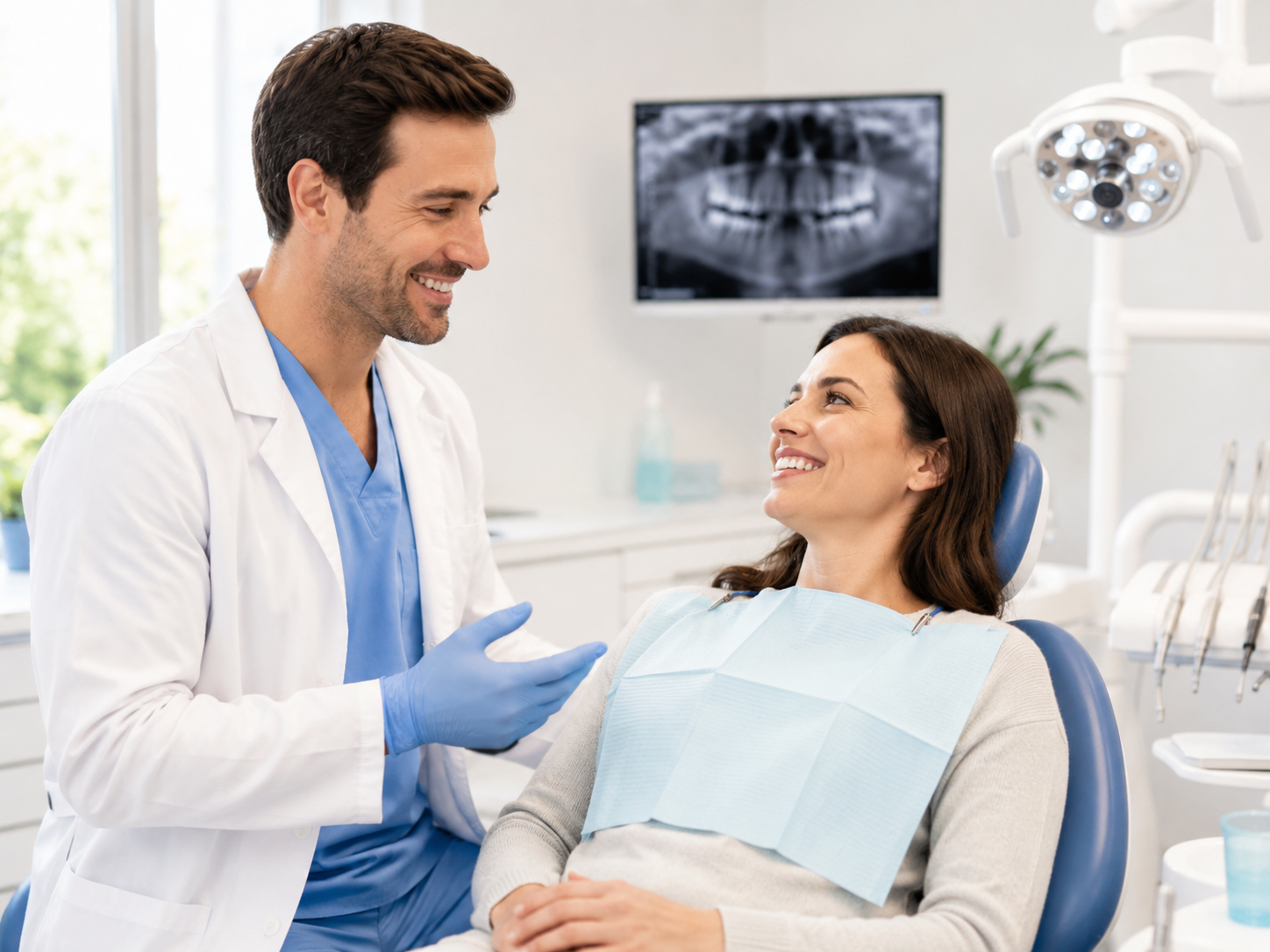
Dental veneers are thin restorations bonded to the front of natural teeth. Rather than covering an entire tooth like a crown, a veneer primarily changes the appearance of the surface that shows when a person smiles.
Every veneer is designed around the patient’s smile, including tooth shape, color, size, and position. The goal is usually to create a balanced result that complements the surrounding teeth and facial features—not simply to make every tooth look identical.
Veneers are most often considered for cosmetic concerns such as:
- Deep or uneven discoloration
- Small chips or worn-looking edges
- Minor gaps between teeth
- Slight differences in tooth shape or size
- Mild visual misalignment
- Teeth that do not respond as desired to whitening
Veneers do not treat active decay, gum disease, infection, or major bite problems. Those issues generally need attention before cosmetic treatment begins.
Porcelain Veneers vs. Composite Veneers
Patients exploring veneers will commonly hear about porcelain and composite options. Both can improve a smile, but their materials, placement processes, maintenance needs, and costs differ.
Porcelain veneers
Porcelain veneers are custom ceramic shells created to match the planned shape and shade of the smile. Ceramic can reflect light in a way that resembles natural enamel and generally offers good resistance to surface staining.
Placement commonly requires detailed planning, tooth preparation, impressions or digital scans, and a later bonding appointment. Depending on the case, temporary restorations may be used while the final veneers are made.
Composite veneers
Composite veneers use tooth-colored resin that a dentist shapes directly on the teeth or fabricates for later placement. They may require less extensive tooth preparation in selected cases and can sometimes be completed more quickly.
Composite can be a practical option for modest cosmetic changes, but the material may stain, wear, or chip differently than ceramic. A dentist can explain how each material is likely to perform based on the patient’s bite and habits.
Who May Be a Candidate for Veneers?
A suitable candidate typically has healthy teeth and gums, enough sound enamel to support bonding, and cosmetic concerns that veneers can realistically address. Good daily hygiene and a willingness to protect the restorations are also important.
A consultation may include an examination, dental imaging when clinically necessary, photographs, and a bite evaluation. The dentist may also ask what the patient hopes to change. Clear communication matters because “a better smile” can mean something different to every person.
Veneers may not be the first recommendation when a patient has:
- Untreated cavities or gum disease
- Very limited remaining tooth structure
- Large fractures or heavily restored teeth
- Significant tooth-position or bite concerns
- Active clenching or grinding that is not being managed
- Missing teeth in the area being considered
In some situations, whitening, bonding, orthodontic care, crowns, or replacement of missing teeth may better match the patient’s needs.
What to Expect From the Veneer Process
The exact process varies by material and by the condition of the teeth. In general, treatment begins with planning rather than immediate tooth preparation.
1. Consultation and smile assessment
The dentist evaluates oral health and listens to the patient’s goals. This is the time to discuss color, shape, the number of teeth being considered, costs, maintenance, and possible alternatives.
2. Treatment planning
Photographs, scans, impressions, or digital previews may help plan the proposed result. Patients should understand what veneers can realistically change before agreeing to treatment.
3. Tooth preparation
Some veneers require removal of a small amount of enamel to create space and achieve a natural contour. The amount varies. So-called minimal-preparation or no-preparation veneers are suitable only in selected cases and are not automatically the most conservative choice for every smile.
4. Fabrication and placement
Porcelain veneers are typically fabricated to the treatment plan and then bonded to the teeth. The dentist checks their fit, appearance, and relationship to the bite before completing placement. Direct composite may be shaped and polished on the teeth.
5. Follow-up and maintenance
A follow-up allows the dentist to evaluate comfort, gum response, and bite. Veneers still require brushing, interdental cleaning, professional dental care, and protection from habits that place excessive force on the front teeth.
Are Veneers Permanent?
Veneers are better described as a long-term dental commitment than as a permanent, maintenance-free treatment. When enamel is removed, the treated tooth will generally continue to need a veneer or another restoration in the future.
Clinical studies of porcelain laminate veneers report that complications can include chipping, cracking, fracture, debonding, sensitivity, changes around the margins, and decay in the supporting tooth. Outcomes vary based on tooth condition, bonding surface, bite forces, habits, material, technique, and ongoing care. A systematic review of porcelain laminate veneers also noted that studies do not always define complications and failures in the same way, making simple lifespan promises inappropriate.
No dentist can guarantee that a veneer will last for a particular number of years. Patients should ask what maintenance, repairs, or future replacement could involve before proceeding.
How to Care for Veneers
Veneers do not develop cavities, but the natural teeth beneath and around them remain vulnerable to decay and gum problems. Consistent home and professional care helps protect the entire smile.
- Brush gently twice a day with fluoride toothpaste.
- Clean between the teeth daily using floss or another dentist-recommended aid.
- Avoid using veneered teeth to open packages or bite hard objects.
- Discuss a nightguard if clenching or grinding is a concern.
- Attend routine dental examinations and cleanings.
- Contact a dentist if a veneer feels loose, chipped, rough, or uncomfortable.
Whitening products do not change the established shade of porcelain or composite in the same way they may lighten natural enamel. Patients considering whitening should discuss the desired final shade before veneers are made.
How Much Do Veneers Cost in Childersburg, AL?
There is no single cost that applies to every patient. The total may depend on the material, number of teeth, complexity of the design, laboratory work, preparatory care, and whether other treatment is needed first.
Because veneers are usually cosmetic, dental insurance may not cover them. However, coverage varies, so patients should request a written treatment estimate and check directly with their insurer. It is also helpful to ask whether the estimate includes consultations, temporary restorations, follow-up visits, and possible repairs.
Price matters, but it should not be the only consideration. Careful diagnosis, conservative tooth preparation, appropriate materials, and a realistic long-term maintenance plan all contribute to the value of treatment.
Veneers Cannot Replace Missing Teeth
A veneer must attach to an existing tooth. If a tooth is missing—or too compromised to support a veneer—the patient needs to discuss tooth-replacement options instead.
Depending on how many teeth are absent and the patient’s oral health, possible options can include a dental bridge, implant-supported restoration, partial denture, full denture, or implant-supported denture. These treatments restore missing teeth rather than simply changing the front surface of a natural tooth.
For patients whose primary concern is extensive tooth loss, Rice Dentures in Childersburg, AL focuses on dentures and implant denture solutions. Available options include full dentures and partials as well as snap-in implant dentures.
Implant treatment involves several distinct stages. Initial symptom recovery after a procedure is not the same as soft-tissue healing. Soft-tissue healing is also separate from osseointegration, during which an implant integrates with the supporting bone. The full treatment is not complete until the planned final restoration is placed and evaluated. Timing varies by patient, so only the treating clinician can provide an individualized schedule.
Questions to Ask During a Veneer Consultation
Patients can make a more confident decision by bringing a short list of questions:
- Are the teeth and gums healthy enough for veneers?
- Would whitening, bonding, orthodontics, or another treatment be more conservative?
- How much enamel would need to be removed?
- Which material is recommended, and why?
- How will the proposed shape and shade be planned?
- What risks are most relevant to the patient’s bite and habits?
- What happens if a veneer chips, loosens, or needs replacement?
- What is included in the written fee estimate?
A trustworthy consultation should leave room for questions and should not pressure a patient into immediate treatment.
Frequently Asked Questions About Veneers
Do veneers hurt?
Patient experiences vary. When tooth preparation is needed, local anesthetic may be used for comfort. Some people notice temporary sensitivity afterward. Persistent or worsening discomfort should be reported to the treating dentist.
Can veneers fix crooked teeth?
Veneers may visually improve very mild irregularities, but they do not physically move teeth or correct every bite issue. Orthodontic treatment may be a healthier or more conservative option when tooth position is the main concern.
Can veneers cover badly damaged teeth?
Not always. A tooth with extensive decay, a large fracture, or insufficient structure may require a different restoration or treatment. An examination is necessary before a recommendation can be made.
Can a patient get only one veneer?
Yes, a single veneer may be possible. Matching one restoration to neighboring natural teeth requires careful attention to shade, translucency, shape, and surface texture.
Are veneers removable?
Bonded veneers can be removed by a dentist, but that does not mean the tooth will return to its original condition. If enamel was removed, another restoration will generally be needed.
What if the main concern is missing teeth?
Veneers cannot fill an empty space without a supporting tooth. A dentist can assess replacement options. Patients considering dentures, partials, or implant denture solutions can contact Rice Dentures in Childersburg, AL, for a personalized consultation.
Choose the Treatment That Fits the Smile
Veneers can create attractive cosmetic changes for carefully selected patients with healthy natural teeth. The best results begin with a thorough evaluation, realistic expectations, and a clear understanding of maintenance and alternatives.
When missing teeth are the real concern, a tooth-replacement solution—not veneers—may offer the function, comfort, and appearance the patient wants. Rice Dentures welcomes patients in Childersburg, AL, who would like to ask questions about dentures, partials, or implant denture options. A personalized consultation is the right place to compare choices and determine the next appropriate step.